Insights
Why Most Barbers Lose Clients After the First Visit

Barber client retention is the single biggest lever most independent barbers never touch — and the most expensive problem they ignore. If you've ever filled a chair with a great first-time client, given them a haircut you were genuinely proud of, and then never seen them again — you're not alone, and it's not your scissors. It's a structural problem almost every independent barber and shop owner runs into, and it's the single biggest reason marketing spend on new clients feels like it disappears into a leaky bucket.
Let's break down why this happens, what it actually costs you, and the specific fixes that move the needle.
The Real Numbers Behind First-Visit Drop-Off
Pull the visit history out of almost any booking system and chart it by visit number, and you'll see the same curve every time: a large group of first-time clients, a noticeably smaller group who came back for visit two, and a steadily shrinking group from there on. In data from beauty businesses tracking this exact metric, roughly two-thirds of first-time clients never book again. The clients who do make it to a second visit return at a much higher rate for a third, and the ones who make it to a fourth visit are close to becoming permanent regulars.
The pattern tells you something important: the first-to-second visit transition is where you lose the most people, and it's also the easiest one to fix. A client who's already sat in your chair once doesn't need to be convinced you're good at cutting hair — they need a reason and a reminder to come back before they forget you exist or a closer/cheaper option catches their eye.
Why It Happens (It's Not the Haircut)
A few things are almost always missing when a first-time client doesn't return:
No follow-up touchpoint. The relationship ends the moment they walk out the door. No message asking how it held up, no thank-you, nothing. Silence reads as indifference.
No specific reason to rebook. "Come back sometime" isn't a call to action. Without a deadline, an offer, or a defined next appointment, rebooking competes with everything else in someone's week — and loses.
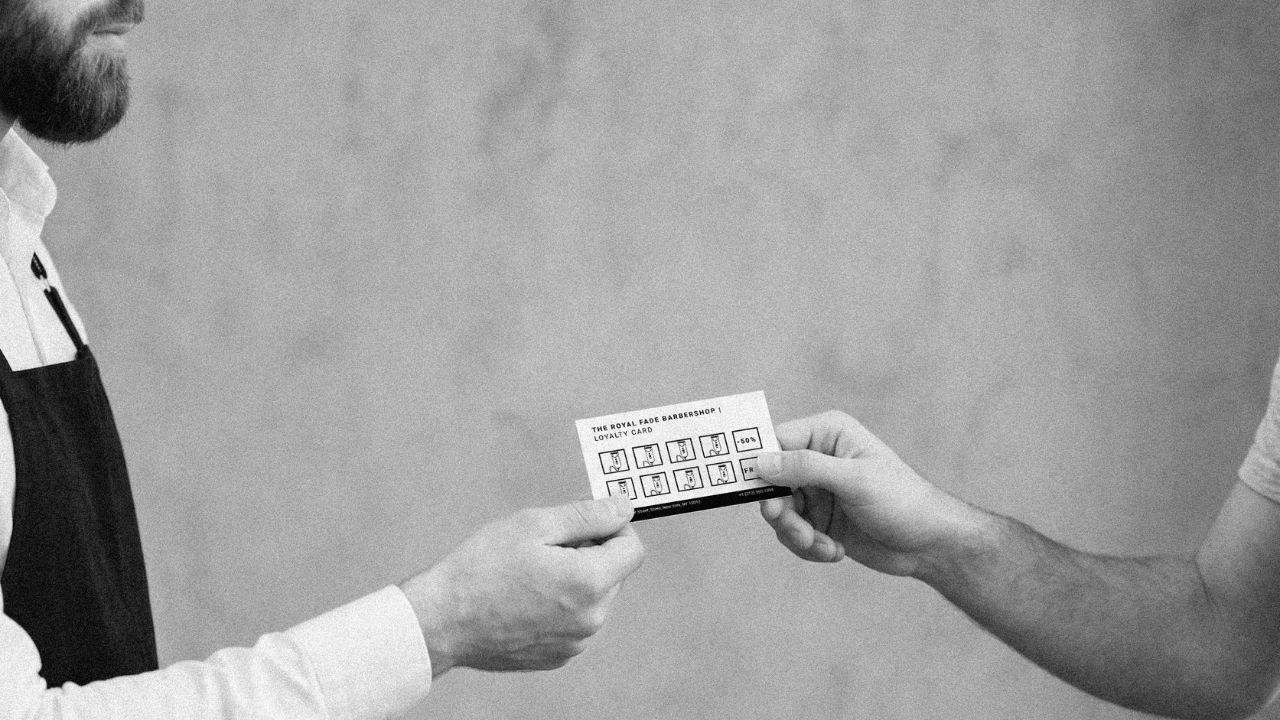
No visible record of progress. If a client doesn't know they're "two visits away from a free cut" or "halfway to VIP pricing," there's no psychological pull bringing them back. This is the single most underused lever in barbershop retention, and it's exactly what a loyalty card is built to solve.
Generic, forgettable service. If nothing about the visit felt personal — no name used, no note taken on what they wanted next time — there's nothing distinguishing you from the next chair they try.
The Math: Why This Is Costing You More Than You Think
Retaining an existing client is dramatically cheaper than acquiring a new one — industry estimates across service businesses put the gap at roughly 5–10x, and beauty-industry-specific data has shown the cost difference running even higher once you factor in ad spend, time, and the discounting often used to win a first-time visitor in the door. Every client who books once and disappears is a paid acquisition cost with zero lifetime value attached. If your average client is worth even a modest amount over a year of repeat visits, a 10–15 percentage point improvement in first-to-second-visit retention can outperform almost any amount of new-client advertising — because you're not paying to re-acquire clients who were already sitting in your chair.
This is the core reason retention deserves at least as much attention as your Instagram ads or referral promos. You've already done the hard, expensive part — getting a new person into the chair. The fix from here is operational, not promotional.
The Three-Part Fix
1. A Follow-Up Message Inside 48 Hours
Within a day or two of a first visit, send a short, personal message checking in: did the cut hold up, any feedback, anything they want adjusted next time. This single touchpoint does two things — it shows the client they're not just a transaction, and it gives you a natural opening to mention when they should book next (most fades need attention in 3–4 weeks, beard work often sooner).
2. A Loyalty Card With Visible Progress
This is the highest-leverage fix on this list, and the one most independent barbers skip entirely. A loyalty card — physical or digital — gives clients a visible reason to return that has nothing to do with how good their last haircut was. Once someone can see they're on "visit 3 of 5" toward a free cut or a discount tier, you're working with a well-documented psychological pull: people push harder to finish something they've already started than something with no visible progress.
A simple, well-designed structure works best. Something like:
- Visit 5 → 20% off one service
- Visit 10 → 40% off or a free haircut
- VIP status after visit 8 → permanent discount tier
The card itself doesn't need to be complicated. It needs to be visible, easy for your front desk or you to stamp or update, and consistent every single visit — no exceptions, no forgetting. That consistency is what makes the mechanic actually work instead of becoming a gimmick clients stop trusting.
If you don't already have a loyalty card system in place, this is exactly what our barbershop loyalty card templates are built for — ready-to-print, on-brand designs you can have stamping visits the same week you download them.

3. A Calendar of Timed Re-Engagement Messages
A follow-up message and a loyalty card both lose effectiveness if there's no system reminding you to actually send the right message at the right moment. Most shops that try to "remember to follow up" manually fail within a month — not because the idea is wrong, but because there's no operational habit behind it.
The fix is a content calendar built around exactly when clients drift away:
- 3–4 weeks post-visit: a light nudge that their fade or beard line is due for a refresh
- 2–3 months post-visit: a stronger win-back offer, since they're now flagged as at-risk
- 6+ months post-visit: a full reactivation message acknowledging the gap and giving them a clear, low-friction reason to come back
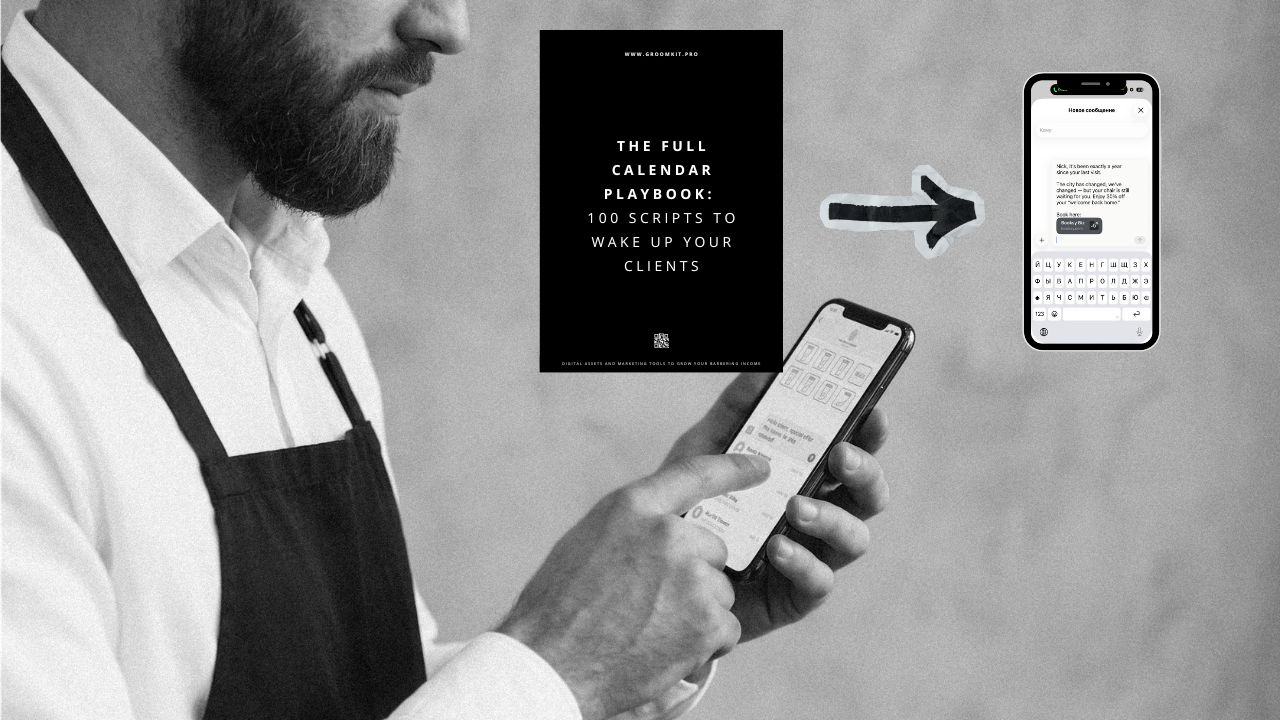
Trying to write 50+ of these messages from scratch, segmented by how long someone's been gone, is where most barbers give up before they start. That's the exact gap our 100 Barber Client Message Scripts pack is built to close — ready-to-send WhatsApp and SMS scripts organized by client status (hot, dormant, cold, VIP), so you're never staring at a blank message box wondering what to say to someone who hasn't been in for three months.
A Simple Retention Checklist to Start This Week
- Pull your booking history and check how many one-time clients you have versus repeat clients — this number alone tells you how urgent this fix is.
- Set up a loyalty card (physical or digital) and start it on every new client's very first visit, not their second.
- Send a follow-up message to your last 10 first-time clients today, even if it's a few weeks late.
- Build a short list of timed messages for the 3–4 week, 2–3 month, and 6-month windows so you're never improvising.
- Track who responds and books — this is the only way to know which message and which offer is actually working.
FAQ
Because nothing happens between visits. Without a follow-up message, a visible incentive like a loyalty card, or a timed reminder to rebook, a first-time client has no structured reason to return and easily drifts to whichever shop is most convenient next time they need a cut.
Yes, by a significant margin. Retaining an existing client typically costs a fraction of what it takes to acquire a new one through advertising or promotions, since there's no acquisition cost involved — just the cost of a message or a small loyalty incentive.
They still work because they tap into a basic psychological principle: people are more motivated to finish something they've already started. A punch card or digital point tracker that shows visible progress toward a reward gives clients a concrete reason to rebook that has nothing to do with marketing.
Within 24–48 hours for a quick check-in, then again around the 3–4 week mark when most cuts and beard lines need a refresh. Waiting longer than that risks the client forgetting about you entirely.
Most barbershops see the best results — and the fewest opt-outs — sticking to a maximum of two promotional messages per client per month, separate from appointment reminders. More than that and clients start tuning out or blocking the number.
Start with the loyalty card, since it requires no ongoing writing once it's set up. Then layer in a small set of timed follow-up messages for clients who haven't visited in 3–4 weeks, 2–3 months, and 6+ months. That combination covers the two biggest reasons clients disappear: no incentive to return, and no reminder that they should.