
Insights
Barber Business Card Ideas for 2026 (That Actually Get Used)
The best barber business card ideas for 2026 combine three things: a clean, brand-consistent design, a QR code linking straight to booking, and a reason for the client to actually keep it — whether that’s a loyalty stamp, a referral offer, or simply a design good enough that it doesn’t feel disposable. Below are 10 specific directions, each with a ready-to-edit template.
Most business cards get thrown away. Here's why some don't.
After more than a decade in marketing and service-industry business — running a branding agency, and now operating a small barbershop chain in Warsaw — I've handed out, redesigned, and thrown away more business cards than I can count.
The pattern is always the same. A card survives in someone's wallet for one of two reasons: it looks good enough that they don't want to lose it, or it's useful enough that they know they'll need it again — a stamp toward a free cut, a discount code, a QR code straight to booking. Cards that are neither get binned within a week.
So instead of one generic template, here are 10 real directions — pick the one that matches your shop's personality, or mix two.
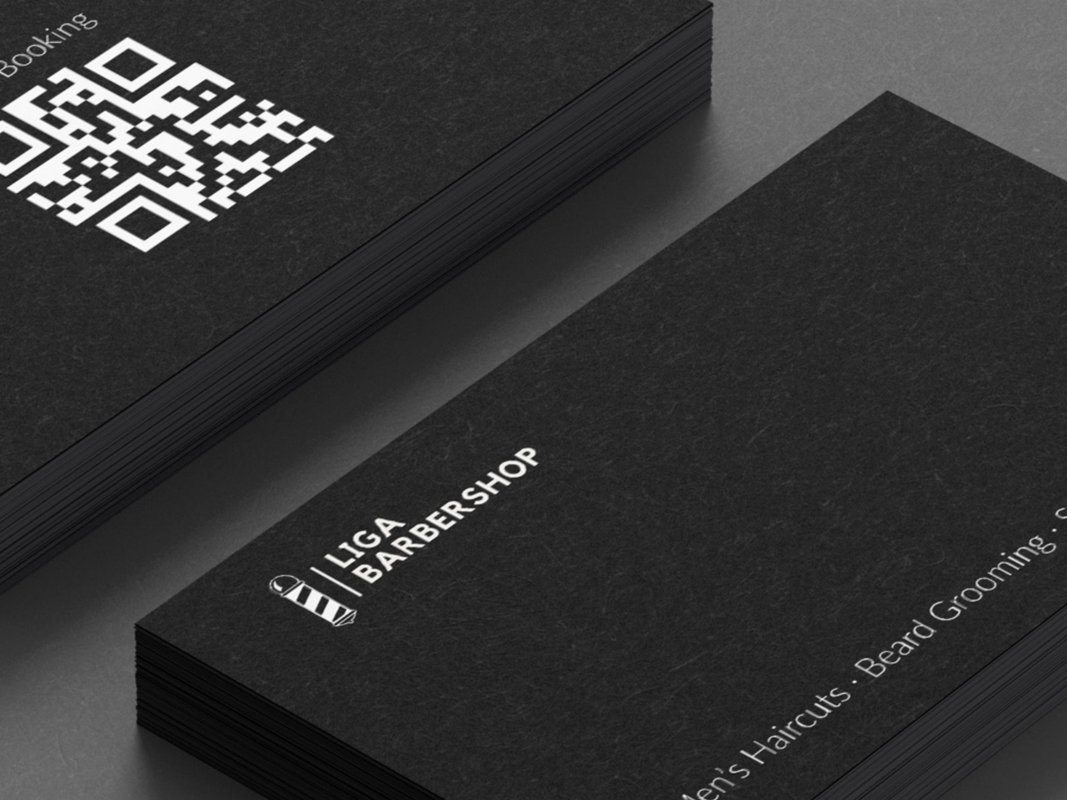
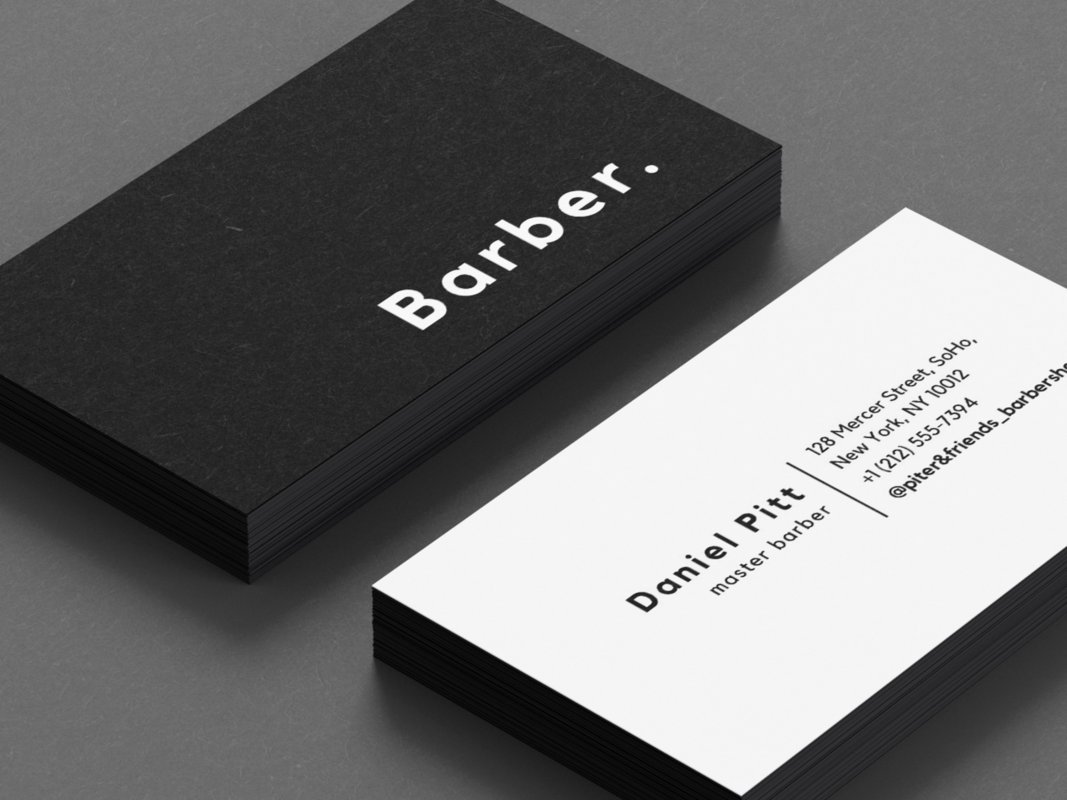
1. Minimal black & white with QR code
The safest, most versatile option. Clean typography, your logo, and a QR code linking directly to your booking page. Works for almost any barbershop aesthetic and never looks dated.
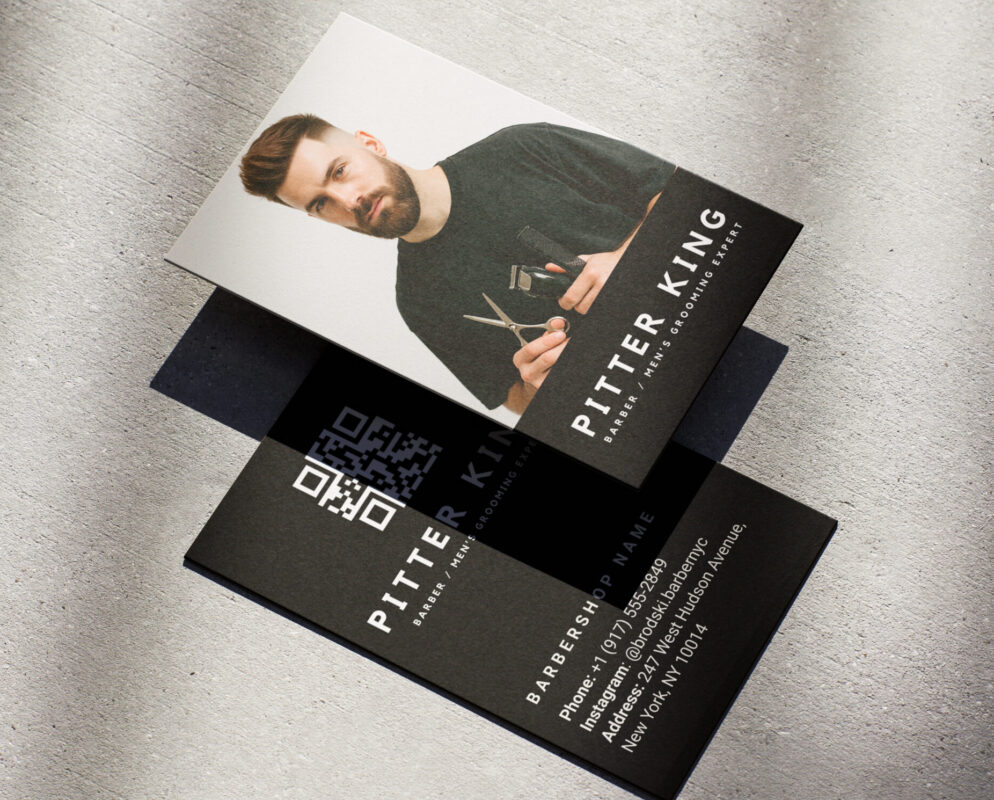
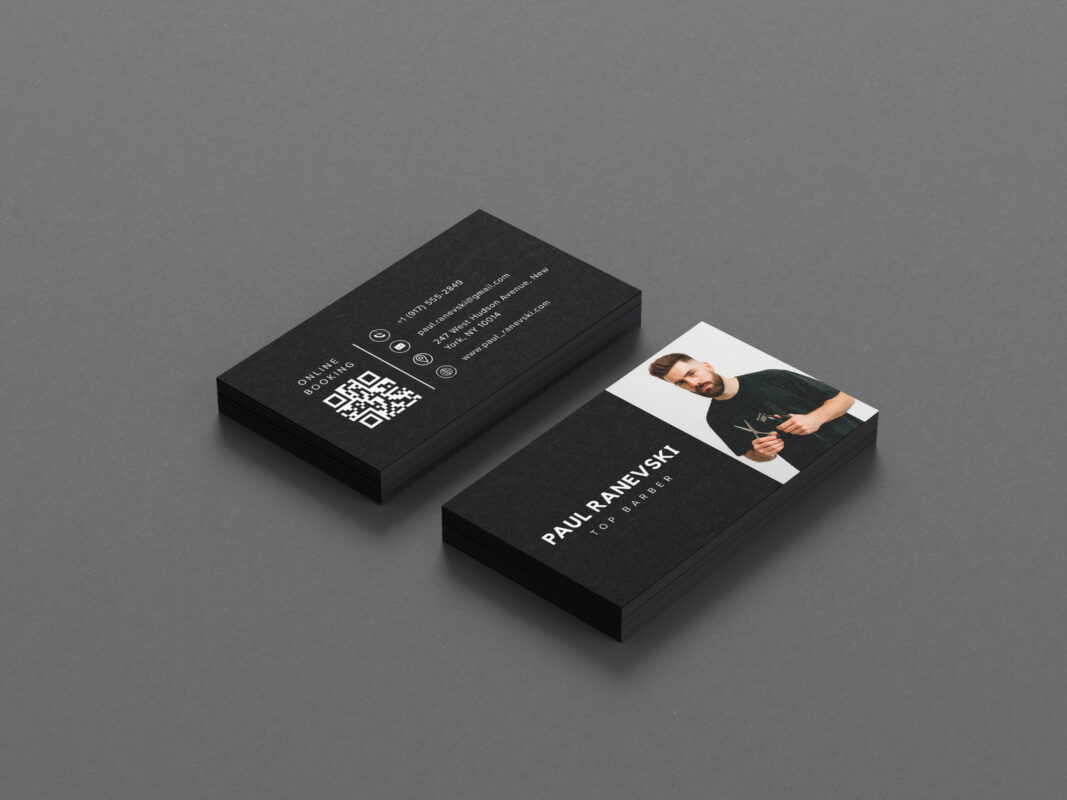
2. Double-sided with photo and QR code
Adding your photo makes the card personal — clients remember faces better than names, especially if they only visit every few weeks. The QR code on the back keeps booking effortless.
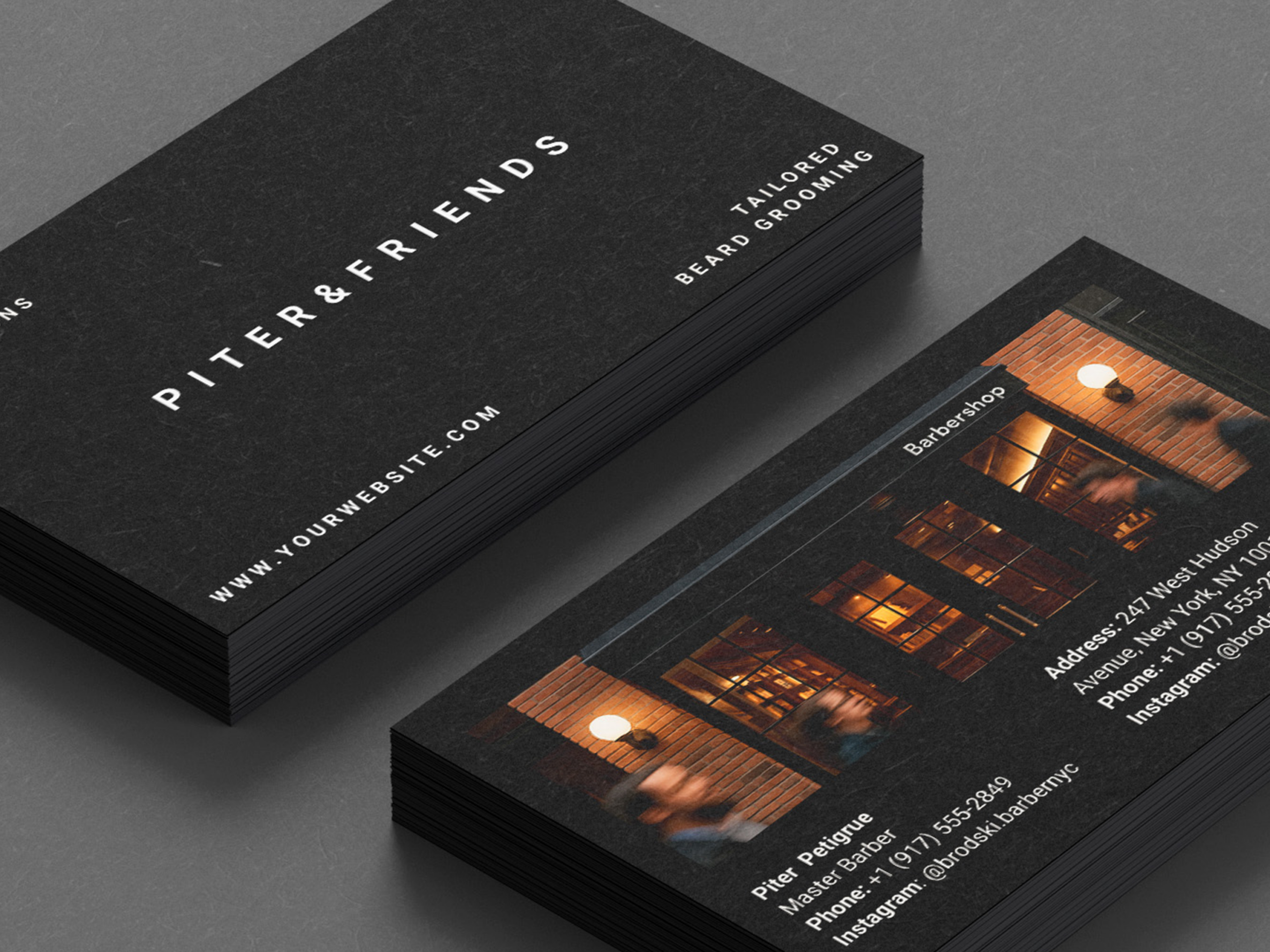
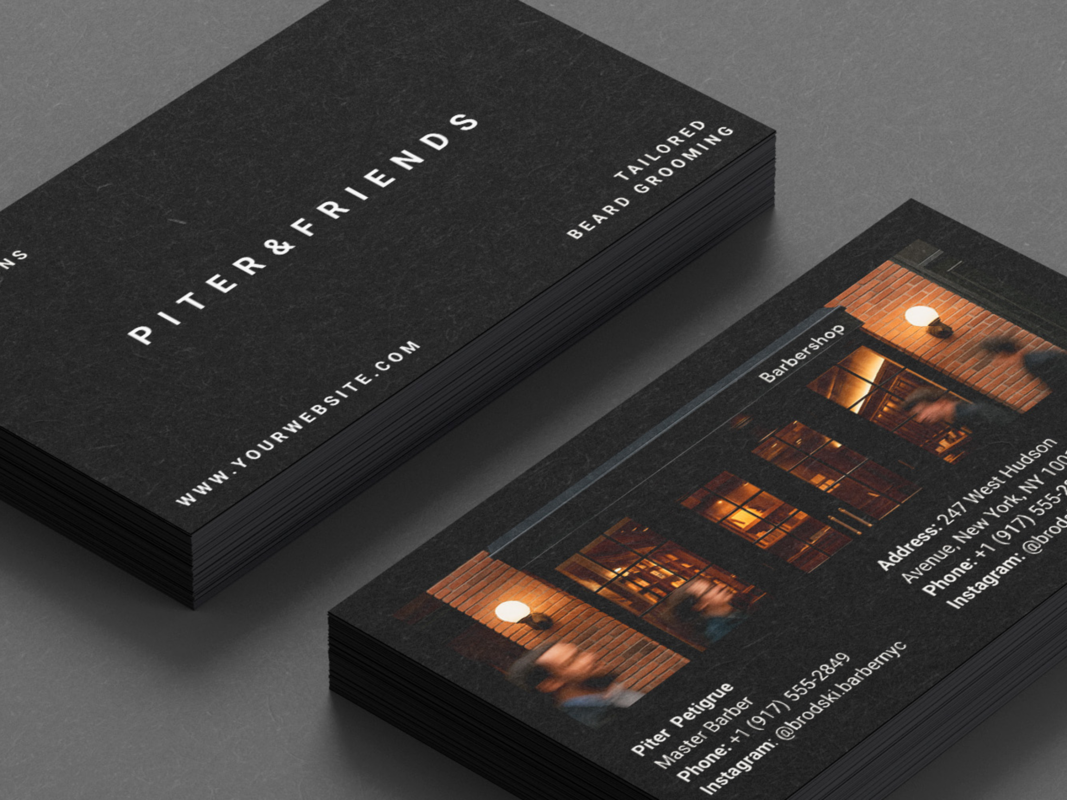
3. Put your shop's interior on the card, not just a logo
A logo is easy to forget. A photo of your actual barbershop — the chairs, the lighting, the vibe — is what makes a client recognize you again later, whether they're scrolling Instagram or walking past on the street.
This matters most for shop owners: a logo promotes a brand nobody's seen yet, but a real photo builds instant trust before a client ever sits down — and it keeps the focus on your barbershop, not on any one barber's name.
Premium Minimalist Barbershop Business Card (Canva Booking Template) →
4. Turn your best cuts into proof, not just a promise
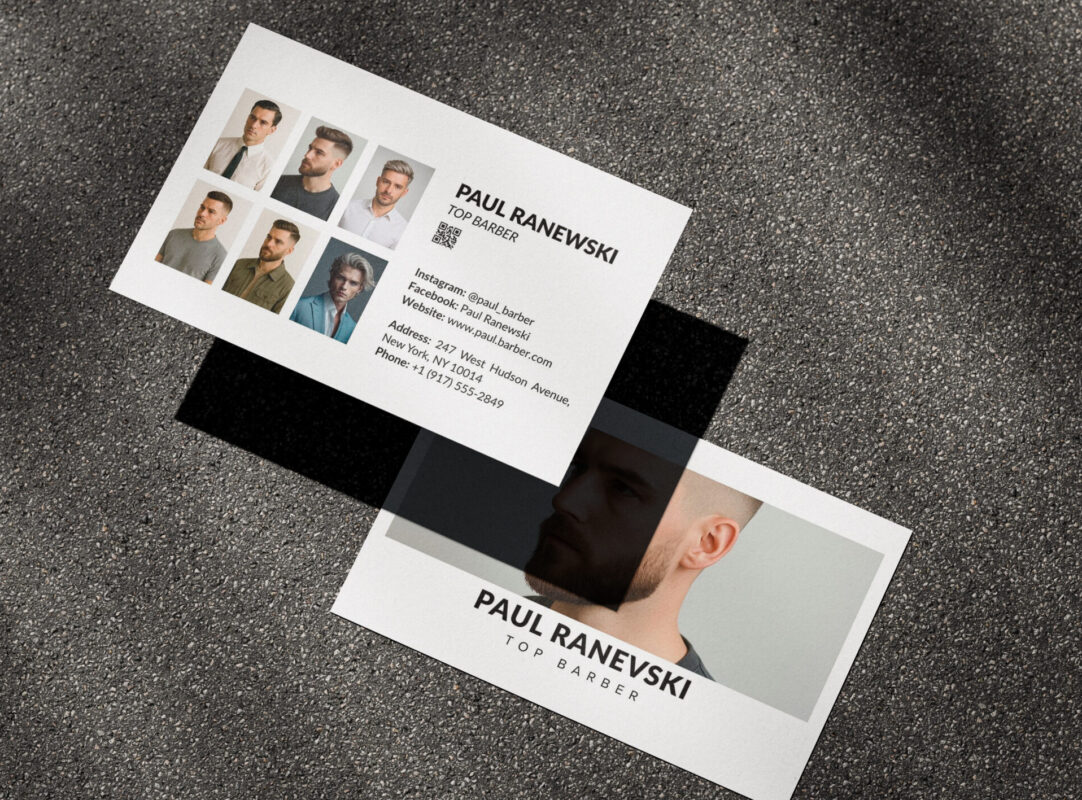
Anyone can claim they're a great barber. A portfolio card lets you show it — a hero shot on the front, and six of your best cuts arranged on the back, so a new client sees the actual range of your work before they've ever sat in your chair.
This works especially well for booking through referrals or handoffs, where the person receiving the card has never seen you cut hair — the photos do the convincing that a name alone can't.
Barber Portfolio Business Card — White Minimal with 6-Photo Work Grid →
Swap in your own six best shots, add your details, and it's ready to print — no design skills needed.
5. Make your face the brand, not the shop's
If you're a chair renter or building your own name inside someone else's shop, a card with the shop's branding doesn't actually work for you — it builds someone else's reputation, not yours. This card flips that: your face fills almost the entire front, so from the first glance, clients connect the cut with you, not the address.
That matters most when you move chairs or shops — a personal card stays accurate, while a shop-branded one instantly goes stale.
Solo Barber Name Card — Full-Face Photo with Bold QR Code →
Swap in your photo and details, and it's ready to print in minutes.
6. Loft-style, two color options
If your shop leans industrial or vintage — exposed brick, leather chairs, an old-school barber pole — a loft-style card with a choice of two color palettes fits the aesthetic without feeling like a generic template.
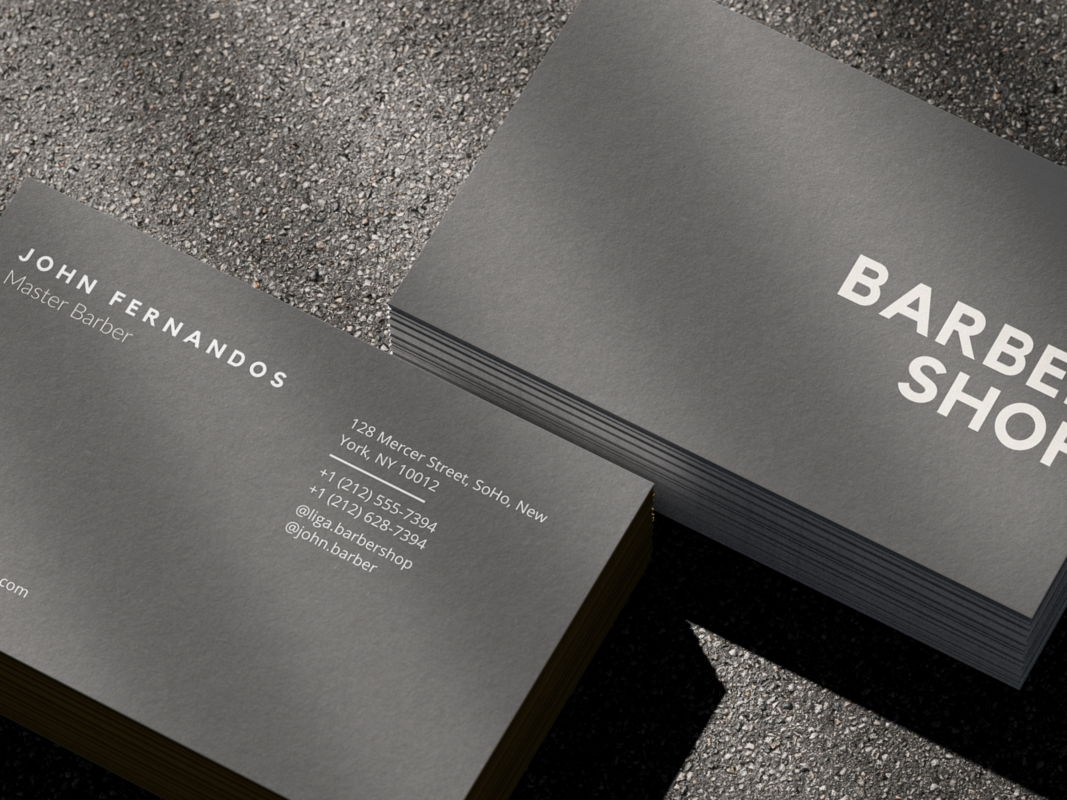
7. Ultra-minimal, text only
Sometimes the boldest move is restraint — no photo, no icon, just your name, your shop, and clean typography on a black or white background. Works especially well for barbers whose reputation already does the talking.
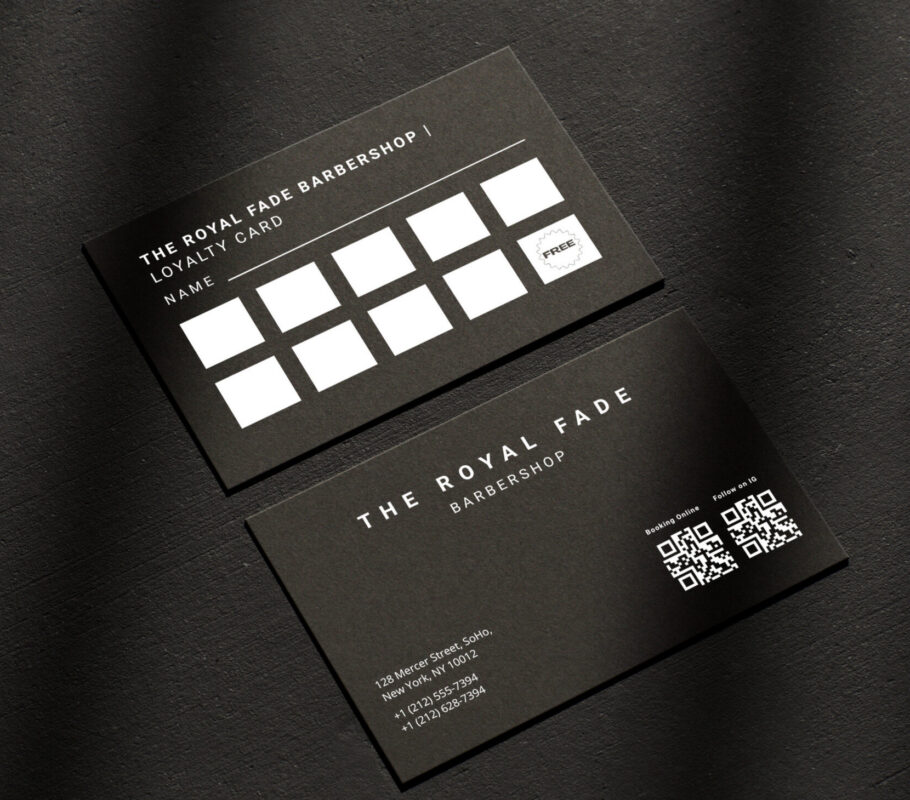
8. Clipper-icon stamp card (loyalty built in)
This is the "keep it in your wallet on purpose" version. A stamp card with a clipper icon design gives clients a literal reason to hold onto it — every visit gets them closer to a free cut.
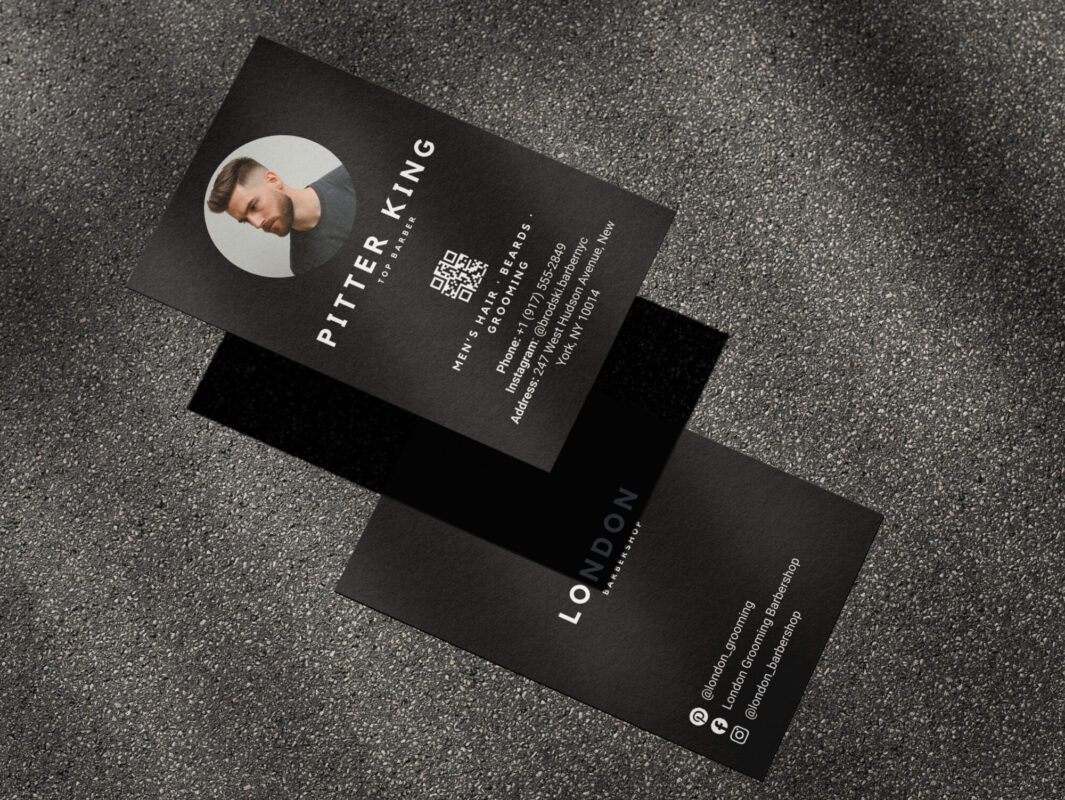
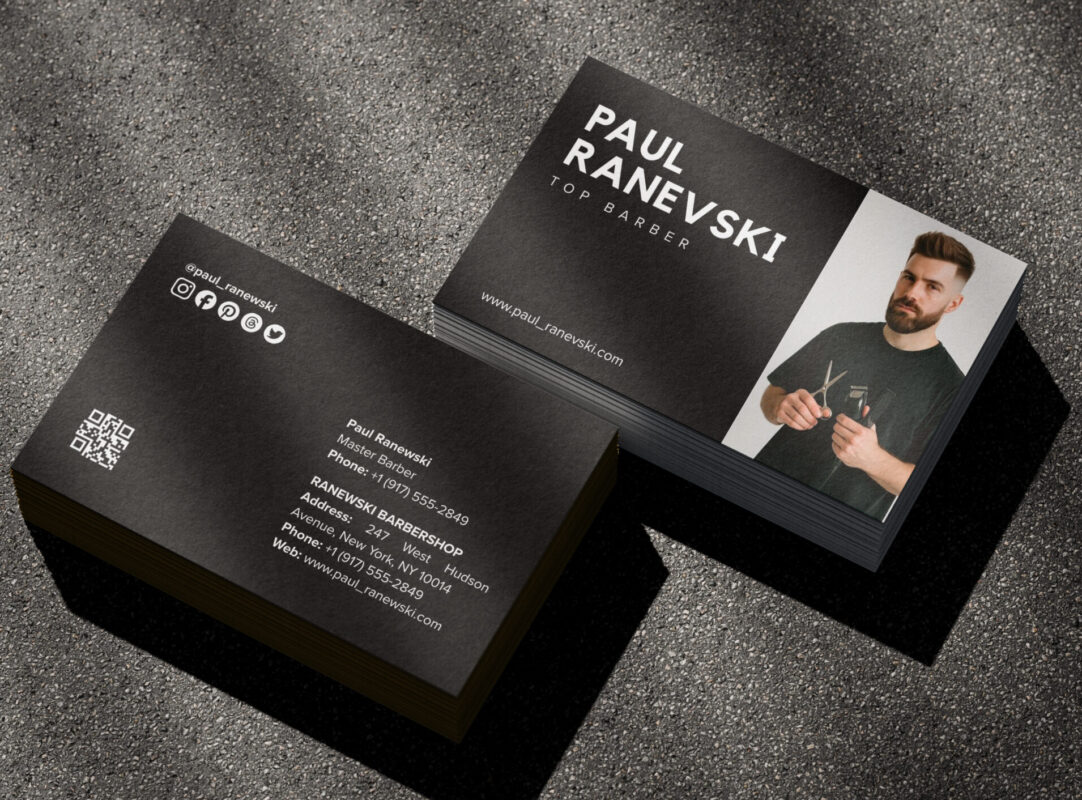
9. One card, both identities covered
Some clients bond with you as a barber; others bond with the shop itself. This card doesn't force you to pick — a personal photo up front connects the face with the cut, while the reverse carries the shop's full identity: website, social icons, address, and a QR code straight to booking.
It's the option for shops that want individual barbers to feel recognizable without losing the shop's own brand in the process — both live on the same card instead of competing for space.
Barber Photo Business Card — Black Two-Sided with Social Icons and QR →
Add your photo, socials, and contact details, and it's ready to print.
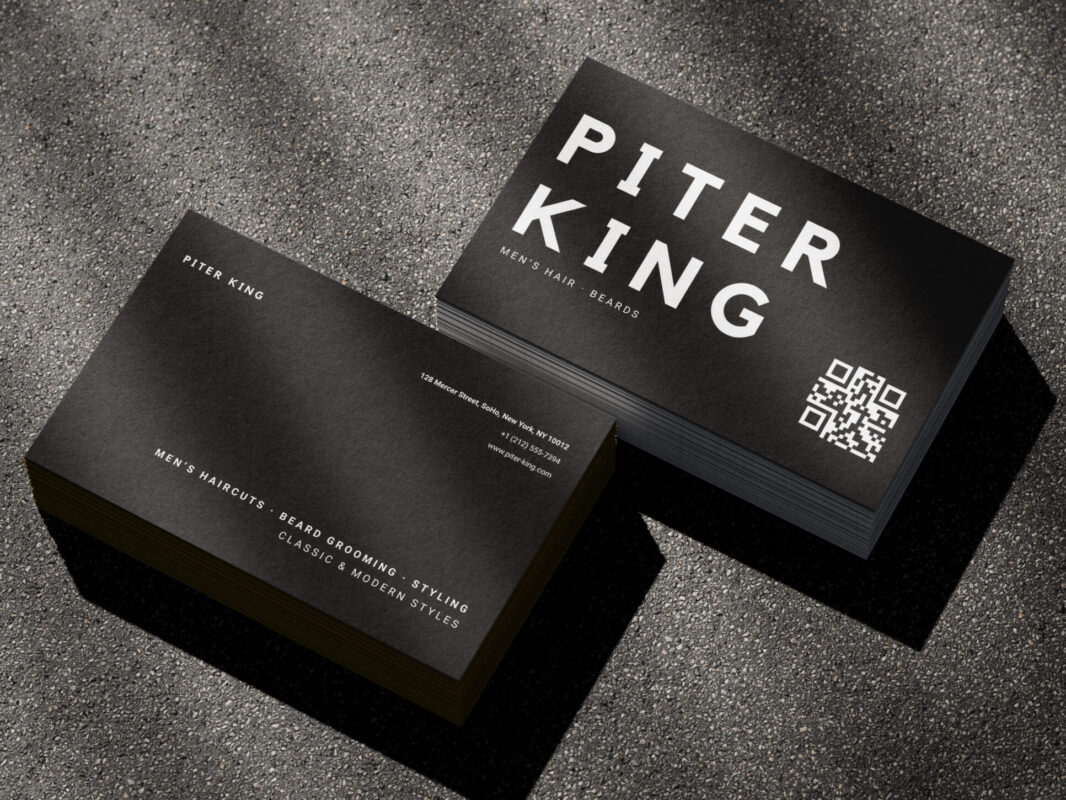
10. When your name alone should be the whole card
Not every barber needs a photo to be memorable — sometimes reputation travels by name, not face. This template puts your name in bold, oversized type as the dominant element on the card, with your services listed clearly underneath and a QR code for instant booking, no portrait required.
It works well if clients already know you by name through referrals or word of mouth, and what they need from the card isn't a reminder of your face — just an easy way to book you again.
Barber Name Card Template — Bold Personal Brand with QR Code →
Drop in your name, services, and QR code, and it's print-ready in minutes.
The idea that changes how all of these get used: give out two
Whichever design you pick, one small shift makes a bigger difference than the design itself: hand out two cards instead of one — one for the client, one "for a friend." It costs nothing extra and quietly turns every happy client into a referral source, without ever having to ask.
FAQ
A design that combines your brand's visual identity with a QR code linking directly to online booking — this removes the extra step of a client having to search for you later, which is what usually causes a card to be forgotten.
It can help — clients often remember faces better than names, especially if visits are spaced weeks apart. It's most useful for barbers building an individual following rather than only promoting the shop.
They serve different purposes. A regular card is the first touchpoint; a stamp or loyalty card gives an existing client a concrete reason to return. Many shops use both — a standard card at first visit, a loyalty card once someone's a regular.
Two is a simple, low-cost way to add a referral channel — one for the client to keep, one to pass along to a friend — without directly asking for a referral.